The Build.
A court is only as good as the earth beneath it. Our process is a linear progression of rigorous site preparation, material engineering, and artistic finishing.
Site Analysis & Civil Prep
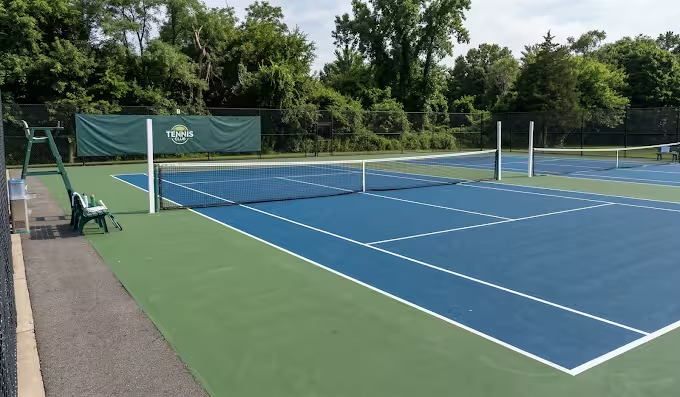
In Northwest Washington, drainage is everything. We begin with a laser-level survey to identify low spots and calculate slope. We ensure the sub-base (asphalt or concrete) meets Planarity Standards before any acrylic is mixed.
- · Laser elevation mapping
- · Moisture vapor transmission testing
- · Sub-base pressure washing & degreasing
Structural Remediation
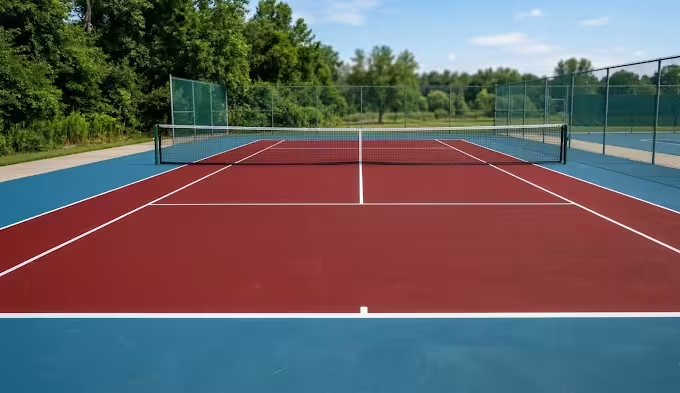
Cracks aren't just an eyesore—they are structural vulnerabilities. We utilize high-tensile membrane systems to bridge cracks, preventing them from "reflecting" through the new surface during freeze-thaw cycles.
- · Armor crack repair systems
- · Acrylic court patch binder application
- · Depressions / "Birdbath" leveling
Surface Application
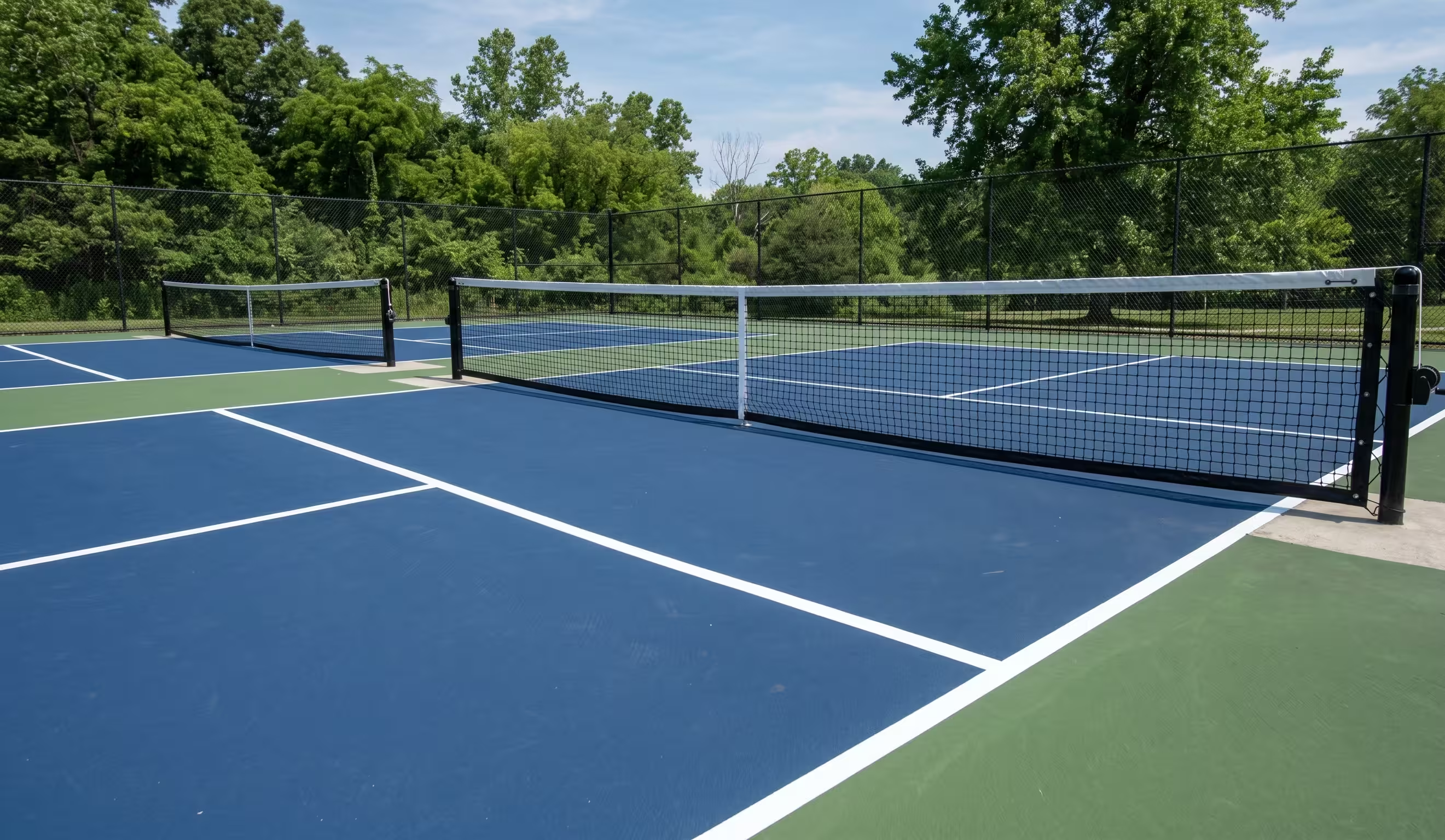
The visible stage. We apply multiple coats of silica-sand reinforced acrylic. The sand provides the "speed" and grit required for safe play, while the pigmented acrylic provides the UV protection and aesthetic.
- · Resurfacer base coats
- · Premium pigment top coats
- · Hand-squeegee application technique
The Signature Finish
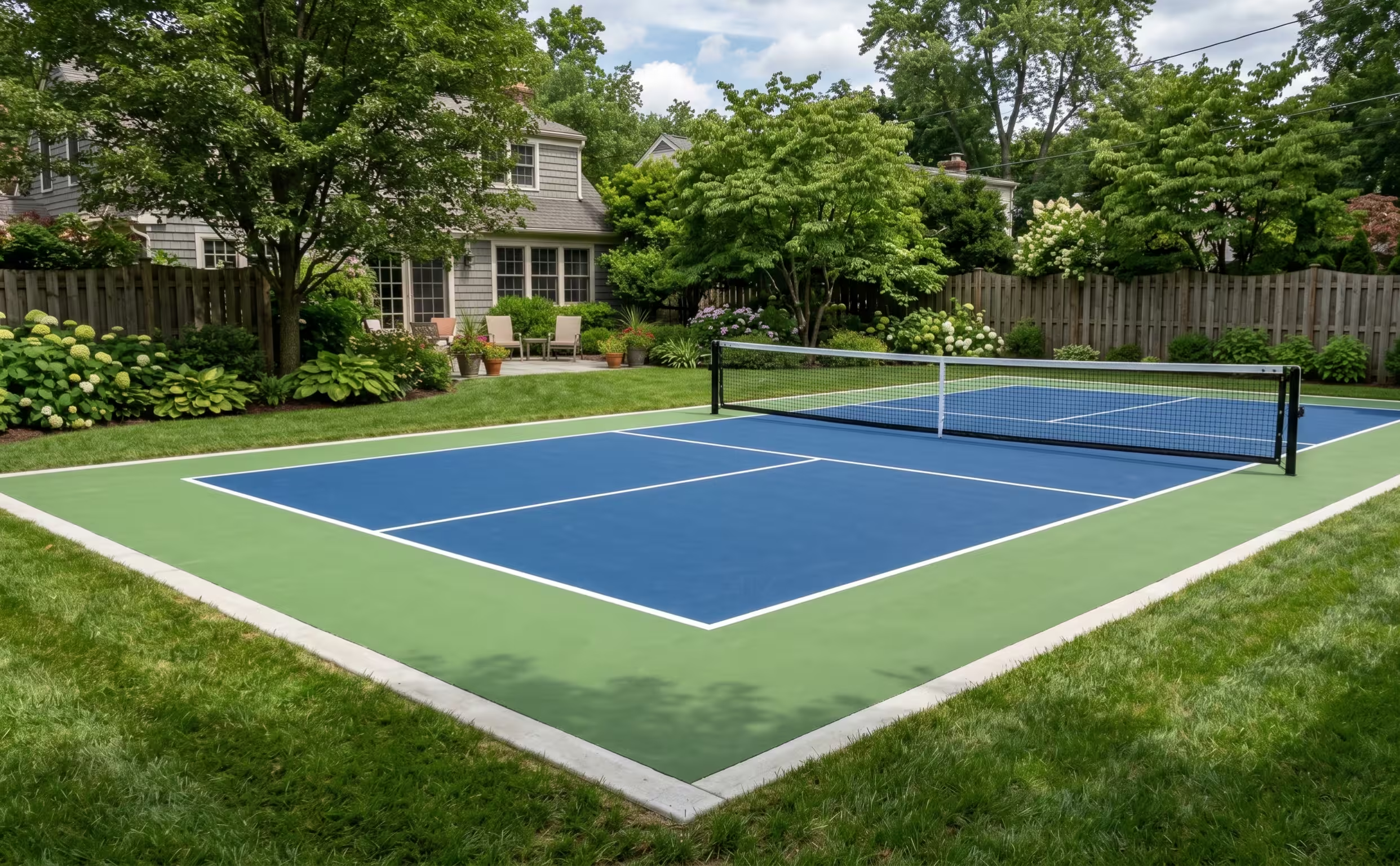
Precision striping. We use textured white line paint to ensure the lines have the same "grip" as the rest of the court, preventing slipping. The court is then inspected and cleared for use.
- · Masking tape line definition
- · Textured "No-Slip" line paint
- · Net post & hardware installation
Protect Your Investment
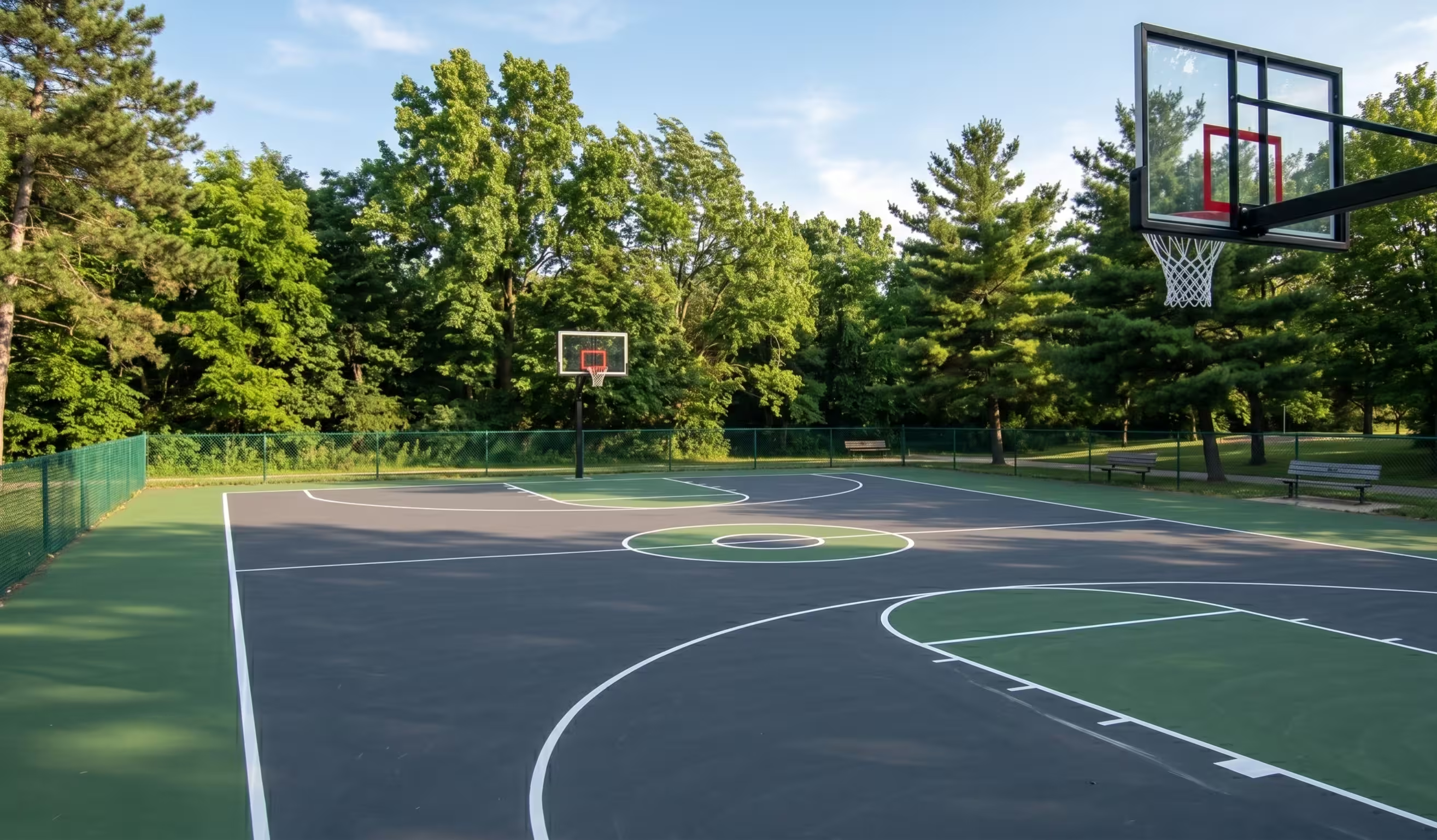
Annual Wash
A gentle low-pressure wash once a year removes algae and moss spores common in Northwest Washington climates.
5-Year Refresh
We recommend a top-coat refresh every 5–7 years to maintain UV protection and optimal play texture.
Materials and standards
Lines are pulled to the standard the court is being built for — USTA for tennis, USA Pickleball for pickleball — rather than approximated. Surfacing uses acrylic systems from established manufacturers including California Sports Surfaces and Plexipave, applied as a resurfacer base coat, two pigmented color coats, and textured line paint. The texture in the line paint matters more than it sounds: untextured lines are slick, and a player crossing one mid-point notices immediately.
Cushioned systems are available where joint comfort is a priority, which is common on courts that will see a lot of pickleball or a lot of older players. There are more than ten color choices, and the combination affects perceived ball speed as well as how hot the surface runs in direct sun.
Working around the Northwest Washington season
Acrylic surfacing needs dry, warm conditions to cure, which compresses the usable season here to roughly late spring through early fall. Base work, excavation, and concrete can often proceed outside that window, but the surfacing itself cannot be rushed into weather that will not let it cure.
The practical consequence is that scheduling matters more here than in drier climates. A court decided on in July is usually surfaced that season; a court decided on in October is usually a spring project. Booking the site survey early costs nothing and keeps the option open.
Questions about how we work
What is the first step in a court project?
A free on-site survey. We look at drainage patterns, sun direction, access for equipment, and how the court fits the lot. Nothing gets quoted accurately from photographs alone, which is why the visit comes first.
Why do you recommend post-tensioned concrete?
It resists the cracking that freeze-thaw cycles cause, which is the main way courts fail in this climate. Standard reinforced concrete and asphalt are both workable, but post-tensioned concrete is what we recommend when the goal is a court that still looks right in fifteen years.
What is a birdbath on a court?
A low spot that holds standing water after rain. Courts are built to a slope of about one percent so water sheets off; where settling or poor original grading has created depressions, we level them with acrylic patch binder before any surfacing goes down.
How often should a court be washed?
Once a year, with a gentle low-pressure wash. That removes the algae and moss spores that are a fact of life in Northwest Washington and that will otherwise make a court slick and shorten the life of the coating.
When should a court be re-coated?
Every five to seven years for a top-coat refresh. That keeps the UV protection intact and the play texture consistent, and it is far cheaper than waiting until the surface has failed and needs full remediation.
Do you do commercial and public works projects?
Yes. We take on prevailing wage and public projects alongside residential work, and we work with specified systems including Plexipave when a project calls for a particular manufacturer.
Related services
- new court construction — if you are starting from bare ground.
- resurfacing and crack repair — if the court is already there and showing its age.
- multi-sport conversions — to add pickleball or basketball to what you have.
- the full range of what we do — across tennis, pickleball, basketball, and sand volleyball.
We work throughout Northwest Washington — Whatcom, Skagit, Snohomish, Island, and San Juan Counties — including Bellingham, Lynden, Ferndale, Blaine, Mount Vernon, Burlington, Anacortes, Oak Harbor, Stanwood, Marysville, and Friday Harbor. Site visits are free anywhere in that range.
Ready to start Phase 01?
It starts with a site survey. Tell us where the court is going and we’ll schedule a visit.
Or call (360) 504-8647Licensed and insured in Washington. Lynden-based crew.