Old court looking rough?
Bring it back to life.
A faded, cracked court doesn't mean you need a new one. Resurfacing fixes the surface, fills the cracks, and gives you a court that looks and plays like new — for a fraction of the price of starting over.
When To Resurface
Signs your court needs work.
Most courts need a resurface every 5-8 years in this climate. Here's what to look for.
Cracks in the surface
Hairline cracks are normal. Wider cracks (1/8" or more) catch balls, trip players, and let water in. The longer you wait, the worse they get.
Faded color & lines
Sun and rain wear out acrylic surfaces. If your blue is more gray and your lines are barely visible, it's time.
Surface peeling or flaking
When acrylic starts peeling up, the surface has lost its bond. Resurfacing locks down a fresh layer that bonds properly.
Moss & mildew buildup
Pacific Northwest courts grow moss. We power wash, treat for moss, and seal — and we can recommend ongoing prevention.
Low spots & standing water
Puddles after rain? The surface has settled or worn unevenly. We can patch and re-level before recoating.
It's been 5+ years
Even if it looks okay, regular resurfacing every 5-8 years prevents bigger problems and keeps the playing surface consistent.
Our Process
How resurfacing works.
Most resurface jobs take 3-7 days from start to finish, weather permitting.
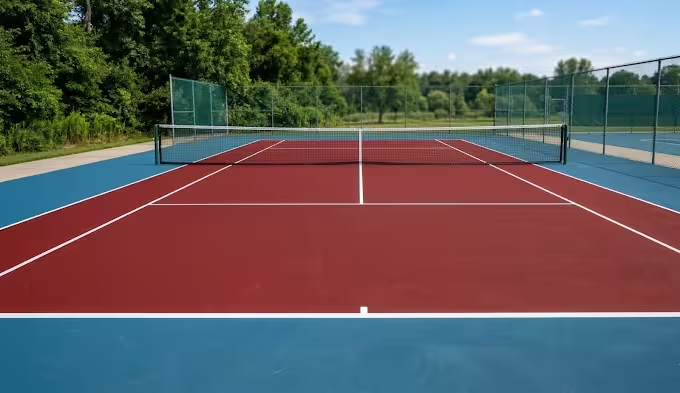
Day 1
Clean & Inspect
We pressure wash the entire surface, removing dirt, moss, and any loose material. Then we walk the court to map cracks, low spots, and trouble areas.
Days 2-3
Repair Cracks & Patches
Cracks get routed out and filled with acrylic crack filler. Low spots get patched and leveled. Bigger structural cracks may need a fabric overlay system — we'll tell you what's appropriate.
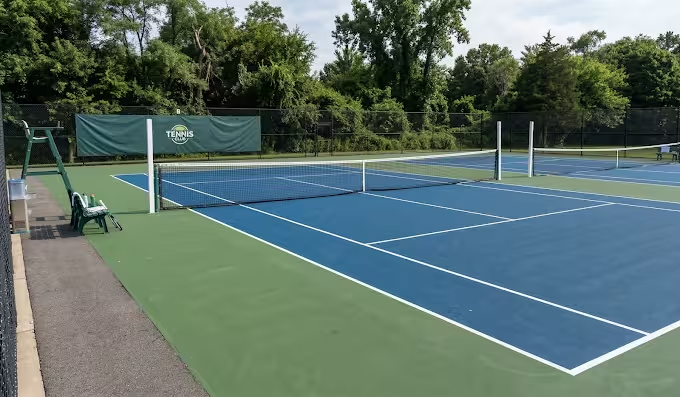
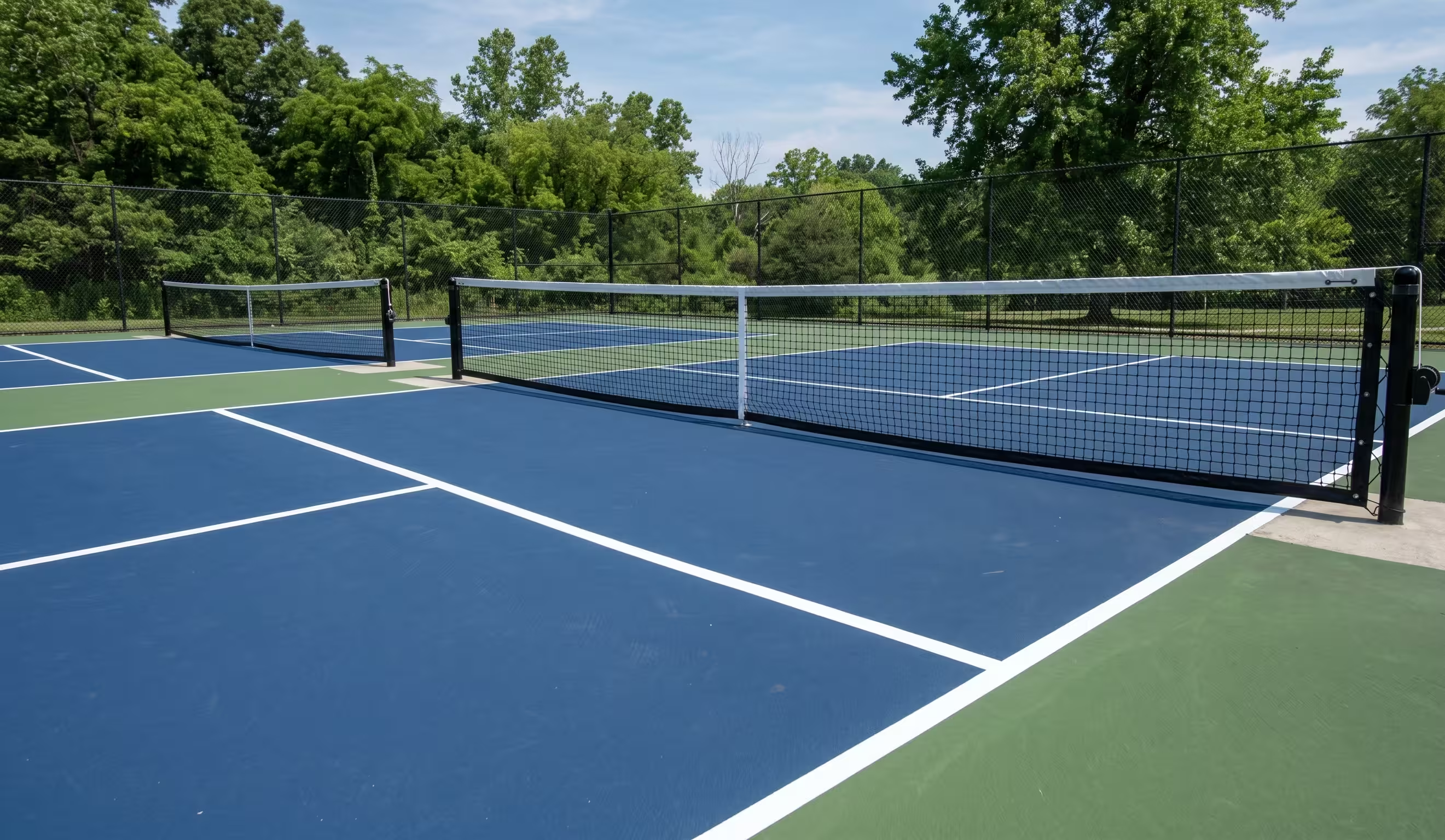
Days 4-5
Acrylic Coats
A resurfacer base coat first, then two finish color coats. Each layer needs proper cure time before the next — we don't rush this. The cure is what makes it last.
Days 6-7
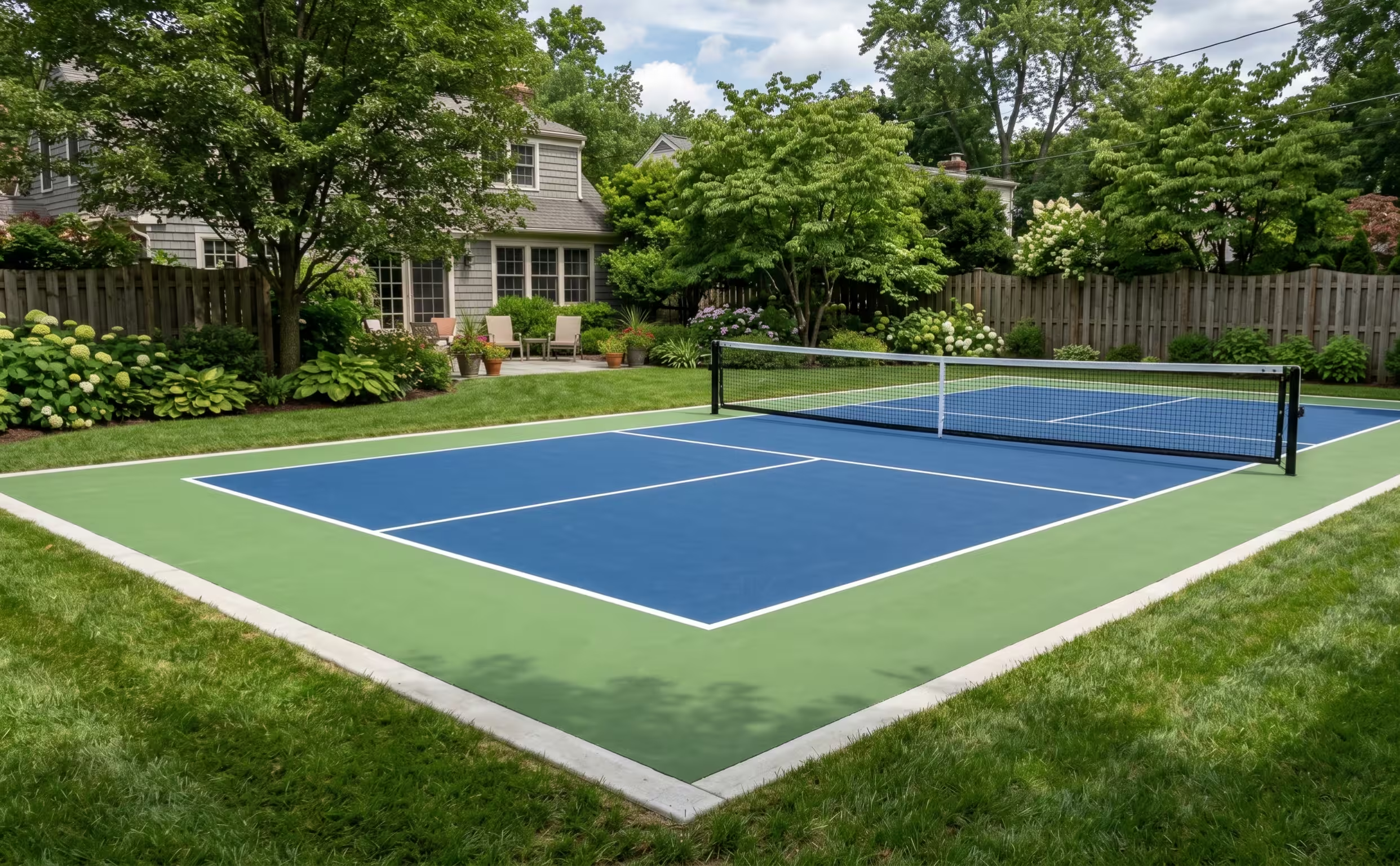
Fresh Lines & Final Check
Lines are pulled, taped, and painted to USTA or USA Pickleball specs. We do a final inspection, clean up, and walk the court with you before we leave.
What It Costs
Honest pricing.
Ranges below assume a court in reasonable shape. Heavily damaged courts or fabric overlay systems run higher.
Pickleball
$4K – $8K
Single court resurface
Includes wash, minor crack repair, two color coats, and fresh lines.
Tennis
$8K – $16K
Single court resurface
Includes wash, crack repair, two color coats, and full restriping.
Basketball
$3K – $7K
Half-court resurface
Includes wash, crack repair, color coats, and free-throw + 3-point striping.
Significant crack damage, low-spot patching, or fabric overlay systems add to the project total. We'll be specific in your written quote.
FAQ
Resurfacing questions.
How long will the new surface last? +
A good acrylic resurface lasts 5-8 years in the Pacific Northwest, depending on use and exposure. Heavily-used club courts may need it sooner; private courts often last longer.
Can my court be resurfaced, or do I need to start over? +
If the base (concrete or asphalt) is structurally sound, resurfacing is almost always the right call. If the slab is heaving or breaking up, we'll be honest with you — sometimes a rebuild is the better long-term move.
How long can I not use the court? +
Plan on 7-10 days of no play. Each acrylic coat needs proper cure time, and we won't put lines on uncured surface. Rushing the cure is how you get peeling and flaking down the road.
Can you change the color or layout? +
Yes. Resurfacing is a great time to switch from green/red to blue/green, or add pickleball lines to an existing tennis court. We have 10+ color options through California Sports Surfaces and Plexipave.
What about moss prevention? +
We treat the surface during resurfacing and can recommend a yearly maintenance routine — usually a light wash and moss treatment in fall. Trees shading the court are the #1 moss accelerator, so we'll point that out if it's an issue.
Common questions about resurfacing
How often does a sport court need resurfacing?
A top-coat refresh every five to seven years keeps the UV protection and play texture where they should be. The signs it is due are faded color, a surface that has gone smooth underfoot, spreading cracks, and standing water after rain.
Can cracks be repaired without replacing the whole court?
Usually, yes. High-tensile membrane systems bridge cracks so they do not reflect back through the new surface during freeze-thaw cycles. A full asphalt overlay is only necessary when the damage is structural rather than surface-level, and we will tell you plainly which one you are looking at.
How much does resurfacing cost compared to a new court?
Resurfacing is a fraction of the cost of building new. What moves the number is square footage, how much crack repair and leveling the surface needs first, and how many coats and colors you want. We price it after seeing the court.
How long does resurfacing take?
Most resurfacing jobs run several days to about a week on site. Each acrylic coat needs to cure before the next goes down, so the schedule depends heavily on weather rather than on labor.
What is the best time of year to resurface a court in Washington?
Acrylic surfacing needs dry, warm conditions to cure correctly, which in Northwest Washington means roughly late spring through early fall. Booking ahead matters, because the usable window here is shorter than it is in most of the country.
What surfacing products do you use?
We work with proven manufacturers including California Sports Surfaces and Plexipave. A typical build-up is a resurfacer base coat, two pigmented color coats, and textured line paint.
Related services
- new court construction — when a court is past the point where resurfacing makes sense.
- converting a tennis court to pickleball — a good pairing with resurfacing, since the surface is coming up anyway.
- our four-phase process — for what actually happens between the crack repair and the final stripe.
- the cost calculator — for a ballpark figure on your square footage.
We work throughout Northwest Washington — Whatcom, Skagit, Snohomish, Island, and San Juan Counties — including Bellingham, Lynden, Ferndale, Blaine, Mount Vernon, Burlington, Anacortes, Oak Harbor, Stanwood, Marysville, and Friday Harbor. Site visits are free anywhere in that range.
Ready to bring your court back?
Send a few details and we’ll take a look. Free on-site assessment across Whatcom, Skagit, Snohomish, Island, and San Juan Counties.
Or call (360) 504-8647Licensed and insured in Washington. Lynden-based crew.